Superscript Pricing Experience Redesign

Redesigning how patients understand, trust, and pay for healthcare costs before treatment.
Year
2026
Category
Product Design
Client
Superscript
Industry
Healthcare Technology
Role
Senior Product Designer
Collaborators
Product Manager, Engineers, Leadership Team

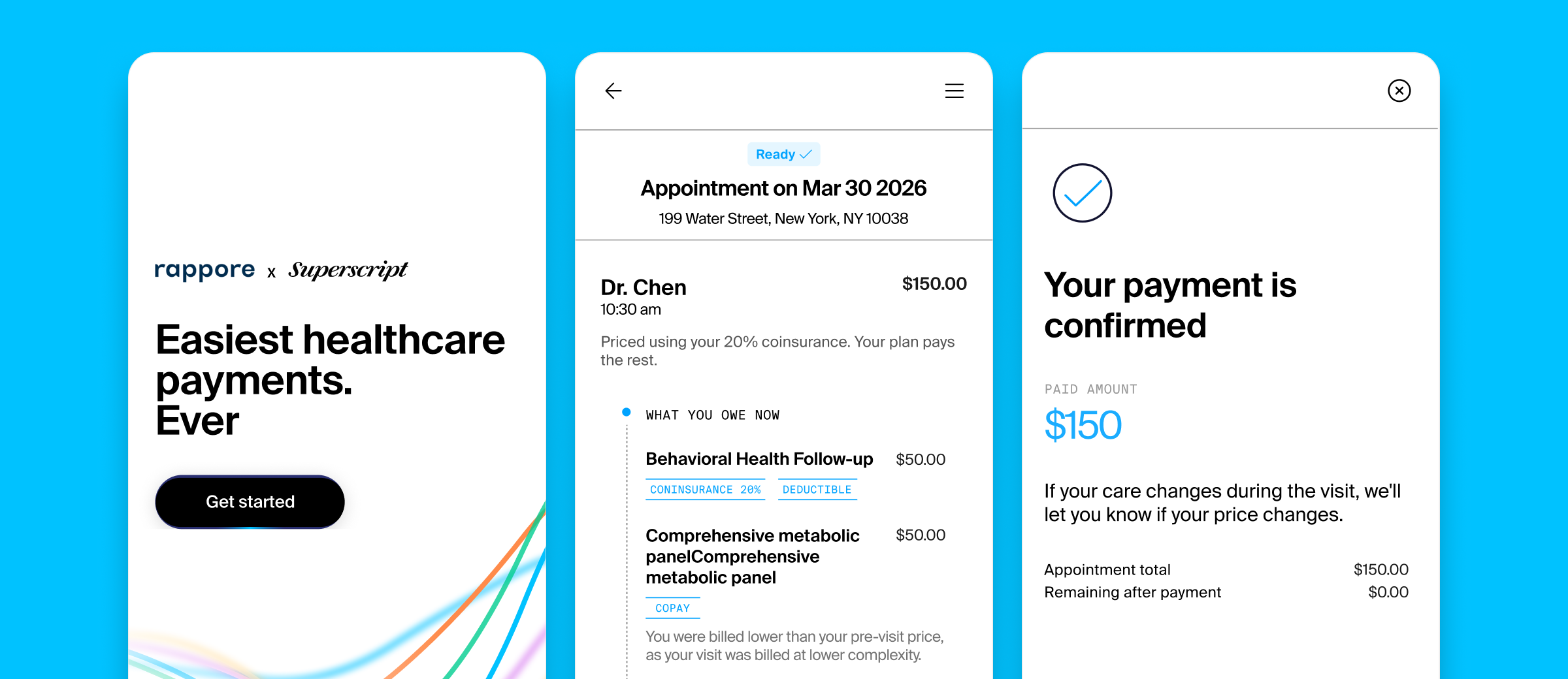
Healthcare pricing is notoriously confusing. Patients often receive unexpected bills after treatment, while providers struggle to explain how costs are determined.At Superscript, I redesigned the pricing and checkout experience to help patients understand what they are paying for, why prices change, and when a price is ready to be paid. The result was a more transparent payment journey that improved confidence before, during, and after care.

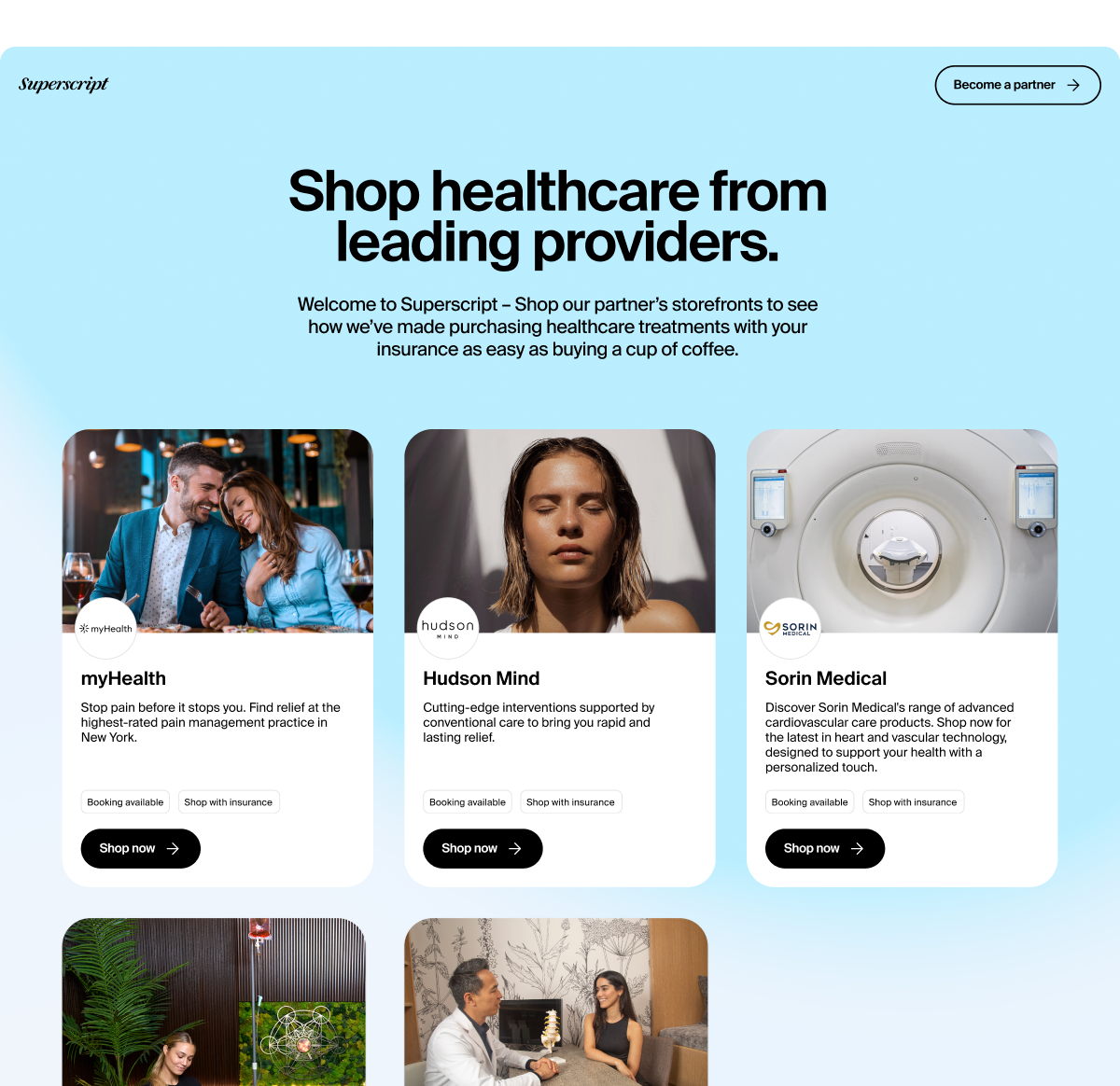
Real prices in U.S. healthcare. Finally.

healthcare technology company focused on improving price transparency in U.S. healthcare. Its product ecosystem connects provider-facing tools with patient-facing experiences, helping healthcare providers calculate, communicate, and collect personalized treatment costs across the care journey.

Designing for price uncertainty

Product Ecosystem

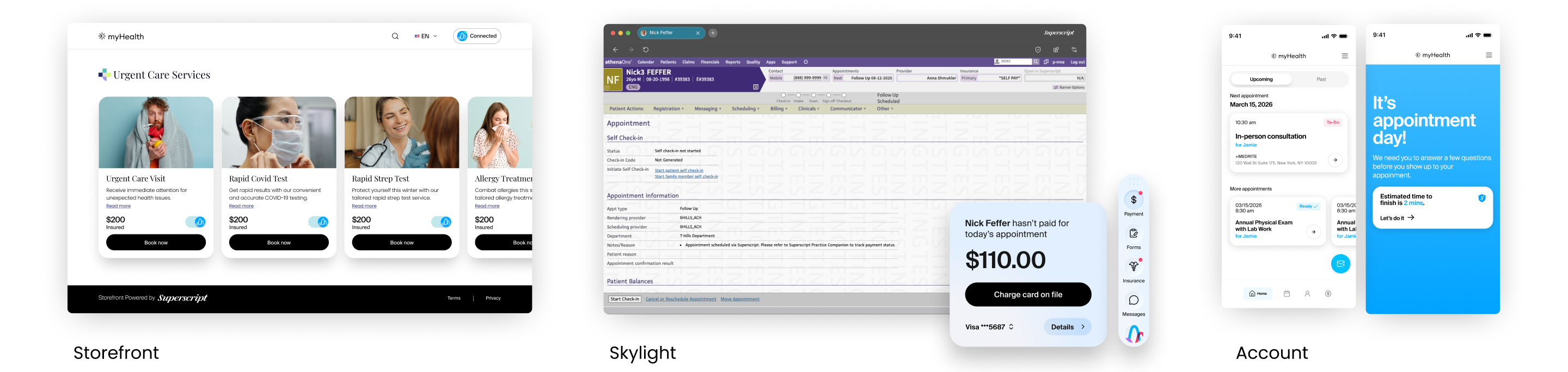
Storefront, Skylight and patients account

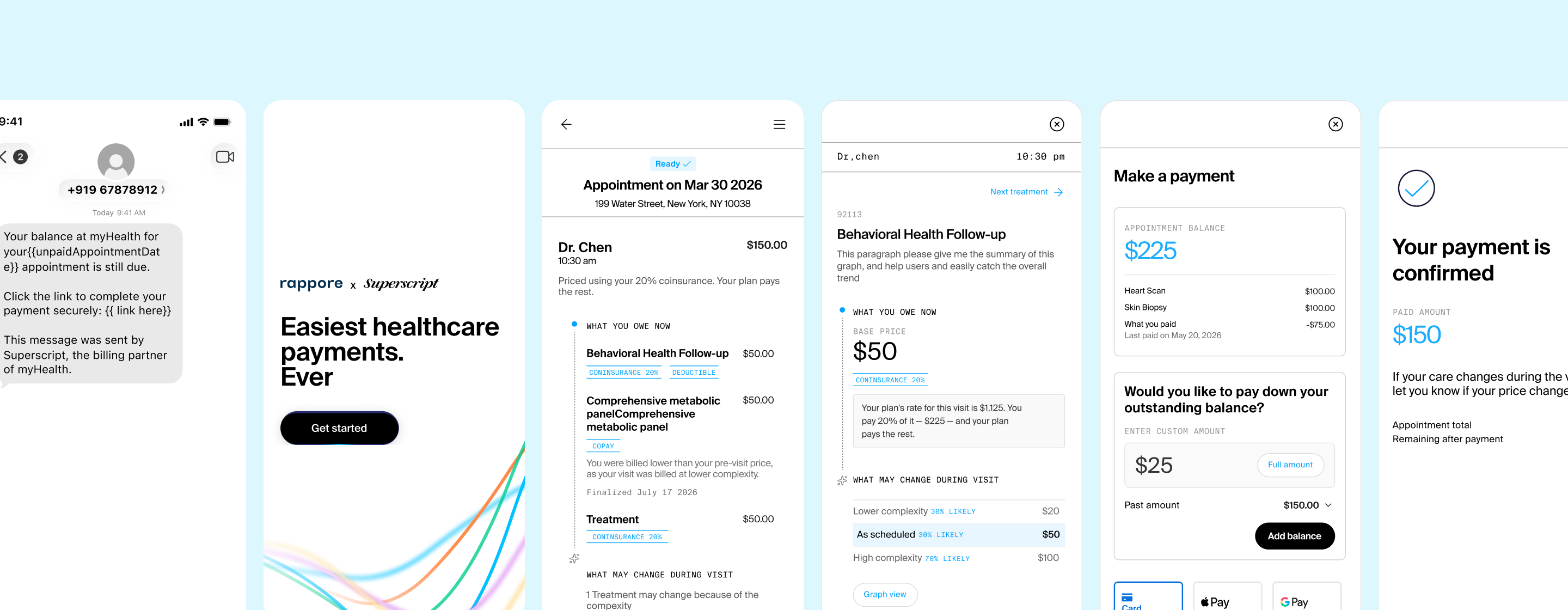
Superscript's ecosystem consists of three connected products. Storefront helps patients book appointments and receive upfront pricing estimates. Skylight enables providers to calculate personalized treatment costs using insurance and pricing rules. Superscript Account supports post-appointment payment experiences, allowing patients to review pricing updates and complete outstanding payments. This case study focuses on redesigning the checkout experience within Superscript Account.

Business challenge

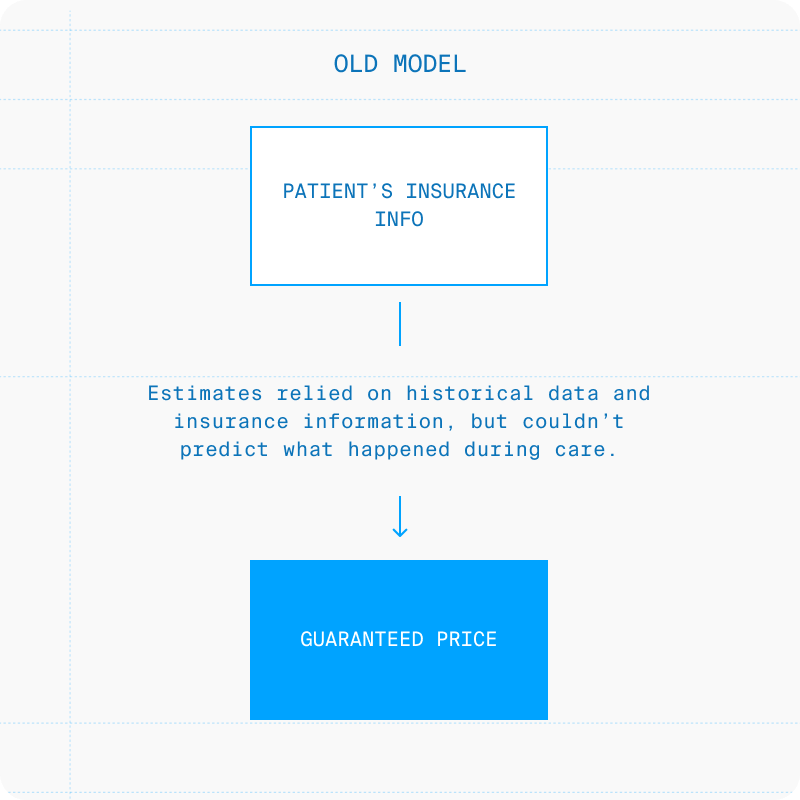
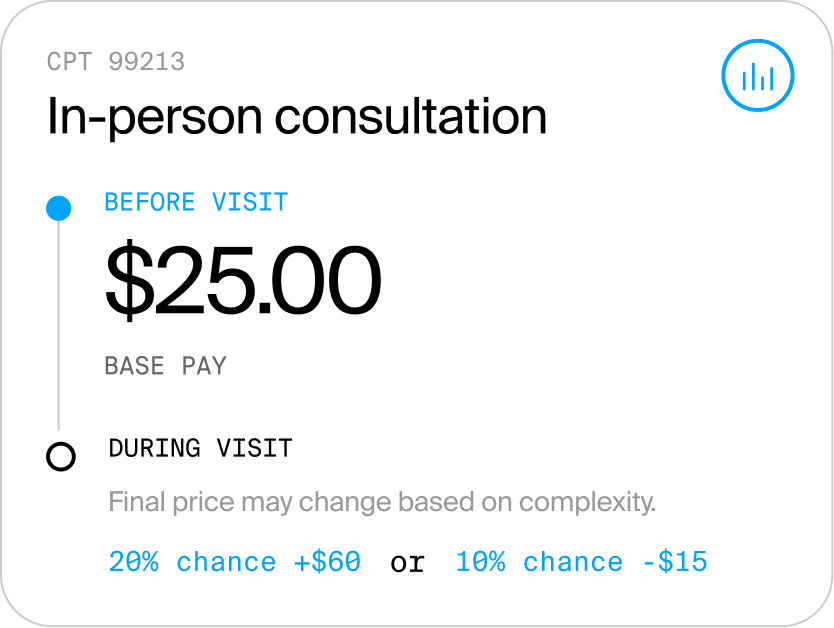
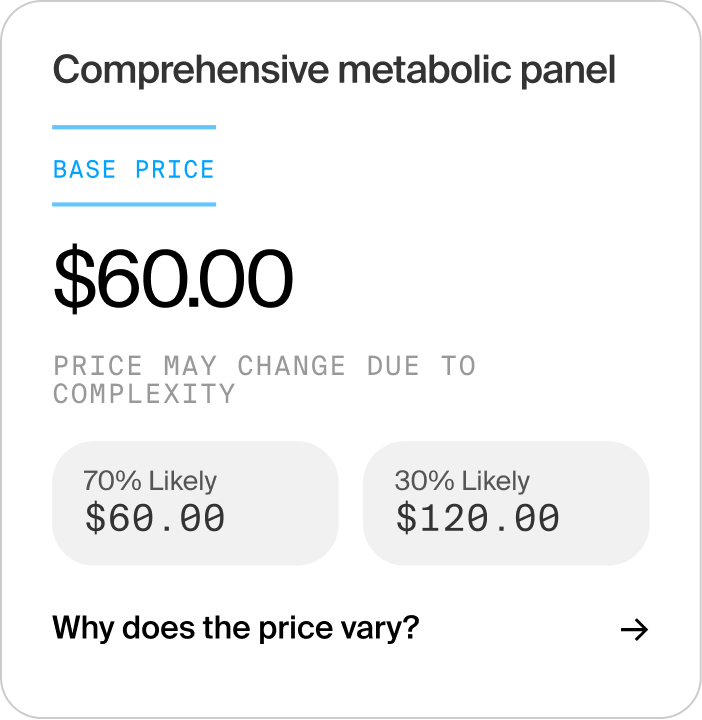
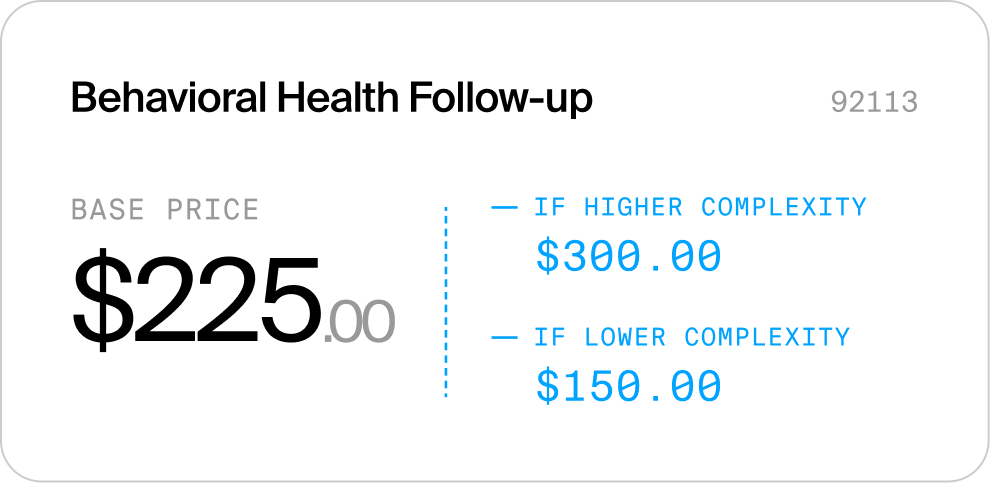
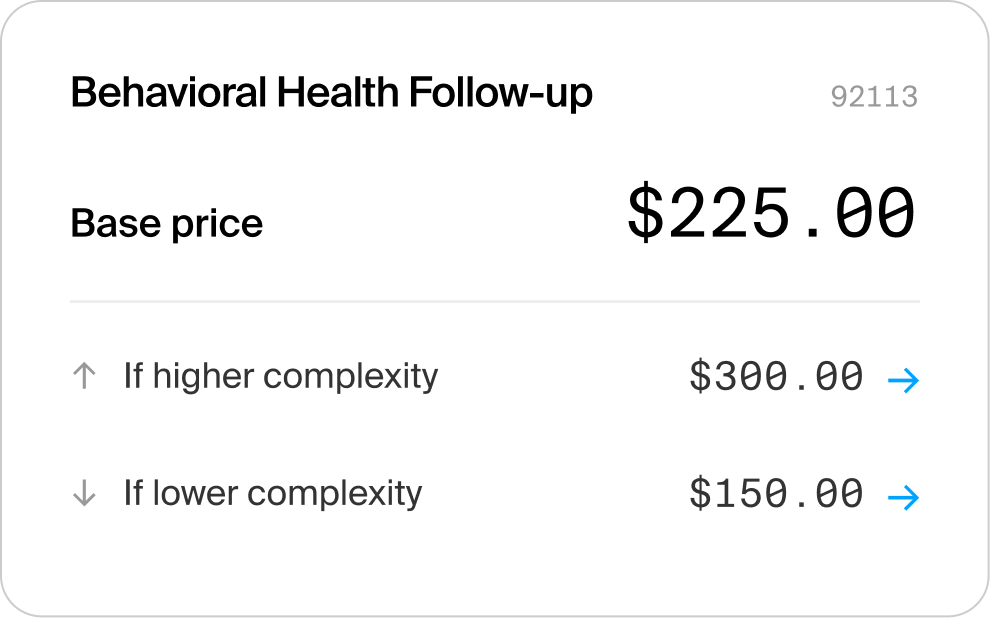
Healthcare prices aren’t static

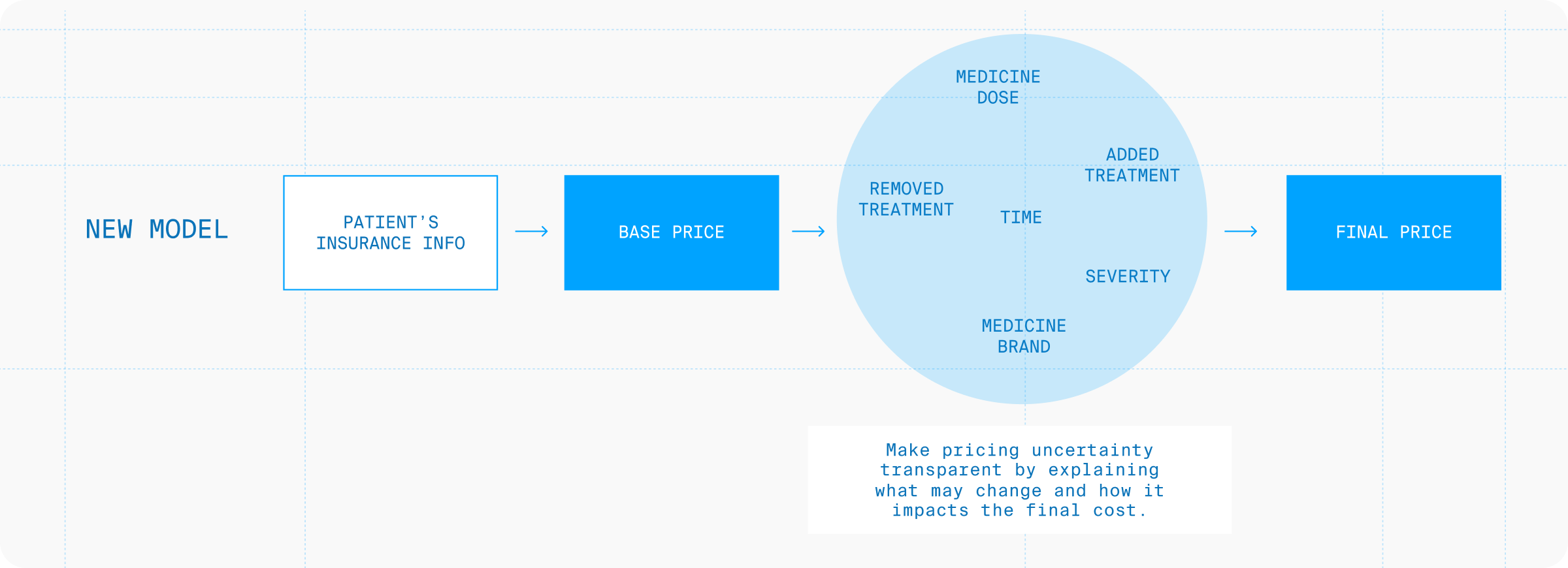
Healthcare costs are influenced by factors that change throughout the care journey. Treatment complexity, insurance coverage, medications, and additional services can all affect a patient’s final responsibility.As healthcare pricing became increasingly dynamic, presenting a single guaranteed final price no longer reflected reality. The opportunity was to design an experience that could communicate uncertainty with clarity—helping patients understand what could change, why it might change, and how those changes could affect their final cost without reducing confidence in the payment experience.

Design Opportunity

Moving beyond guaranteed prices and helping patients understand uncertainty

As Superscript evolved away from a guaranteed-price model, the challenge was no longer simply presenting a final number. Patients needed a clearer understanding of how healthcare pricing works and why costs may change throughout the care journey.The opportunity was to design an experience that could communicate uncertainty with clarity—helping patients understand what might change, why it might change, and how those changes could affect their final cost while maintaining confidence in the payment experience.

Rethinking the Checkout Experience

Problem 01

High drop-off before payment

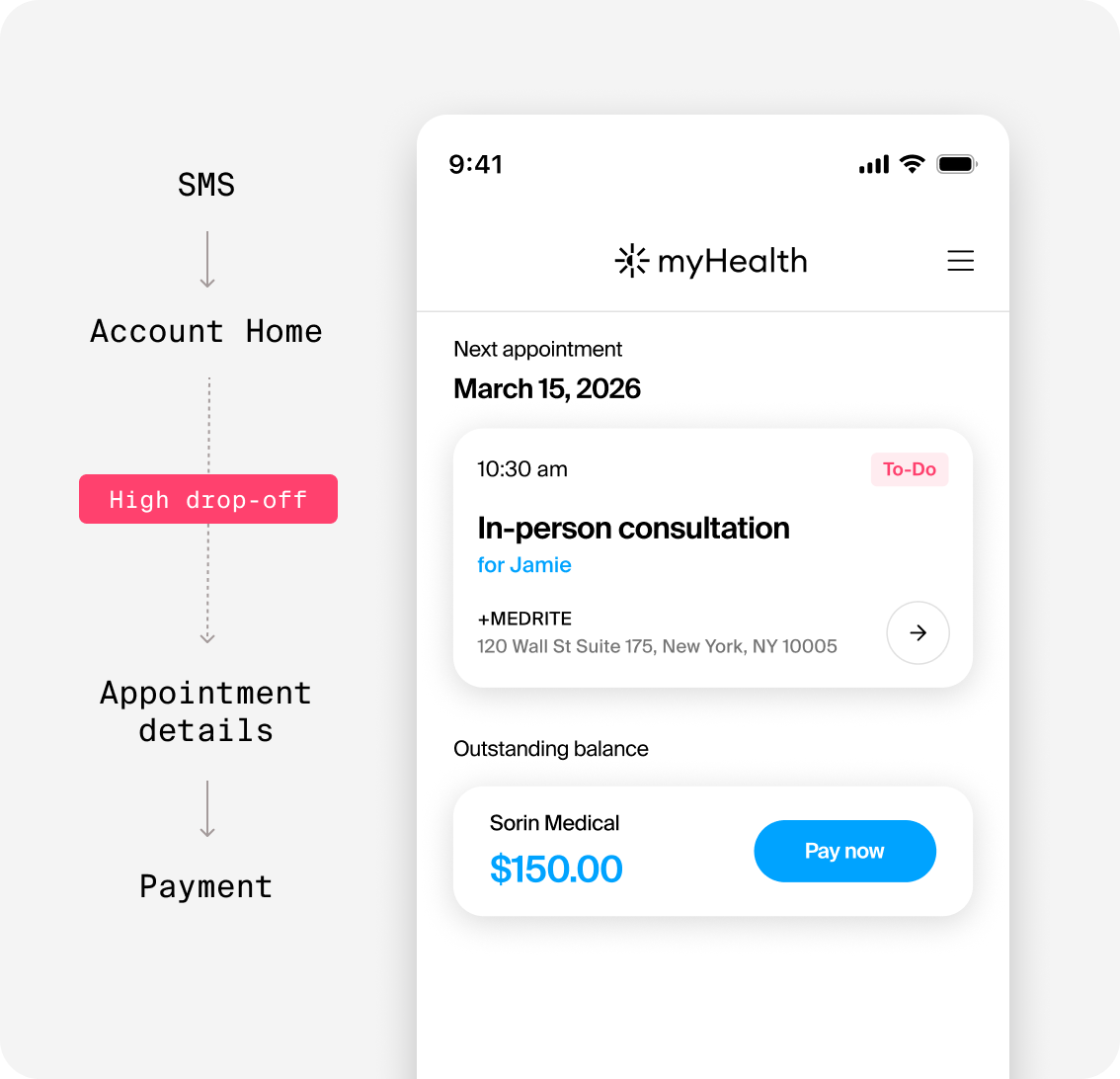
In the previous payment flow, patients first landed on the account home page after clicking the payment link. Internal product analytics identified a meaningful drop-off before patients reached the appointment details page, prompting us to rethink the entry point into the payment experience.

Problem 02

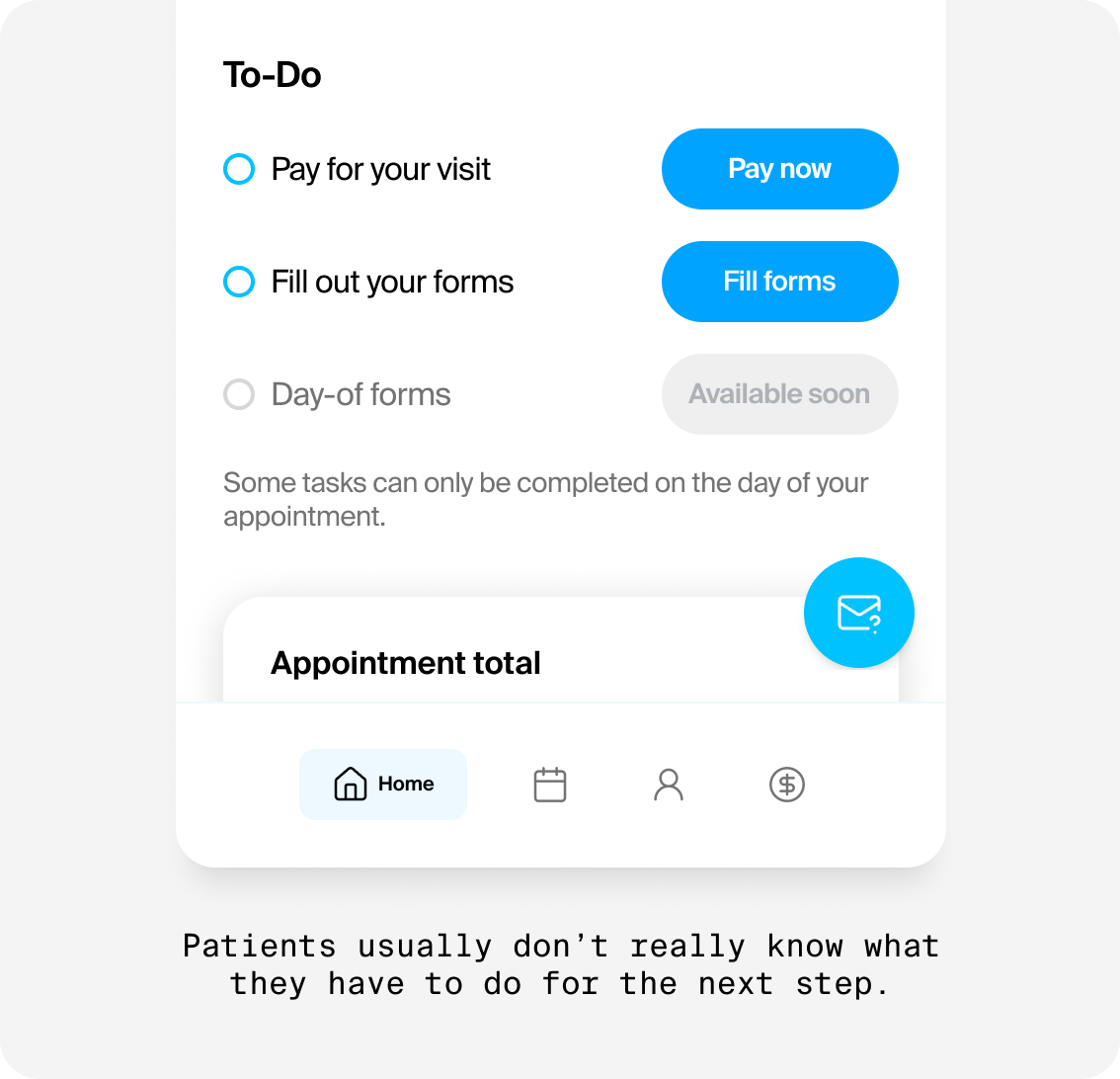
The primary action was easy to miss

The primary payment CTA was placed within the to-do list rather than alongside the pricing information. This reduced its visual prominence and weakened the relationship between reviewing pricing information and completing payment.

Problem 03

The experience created false price certainty

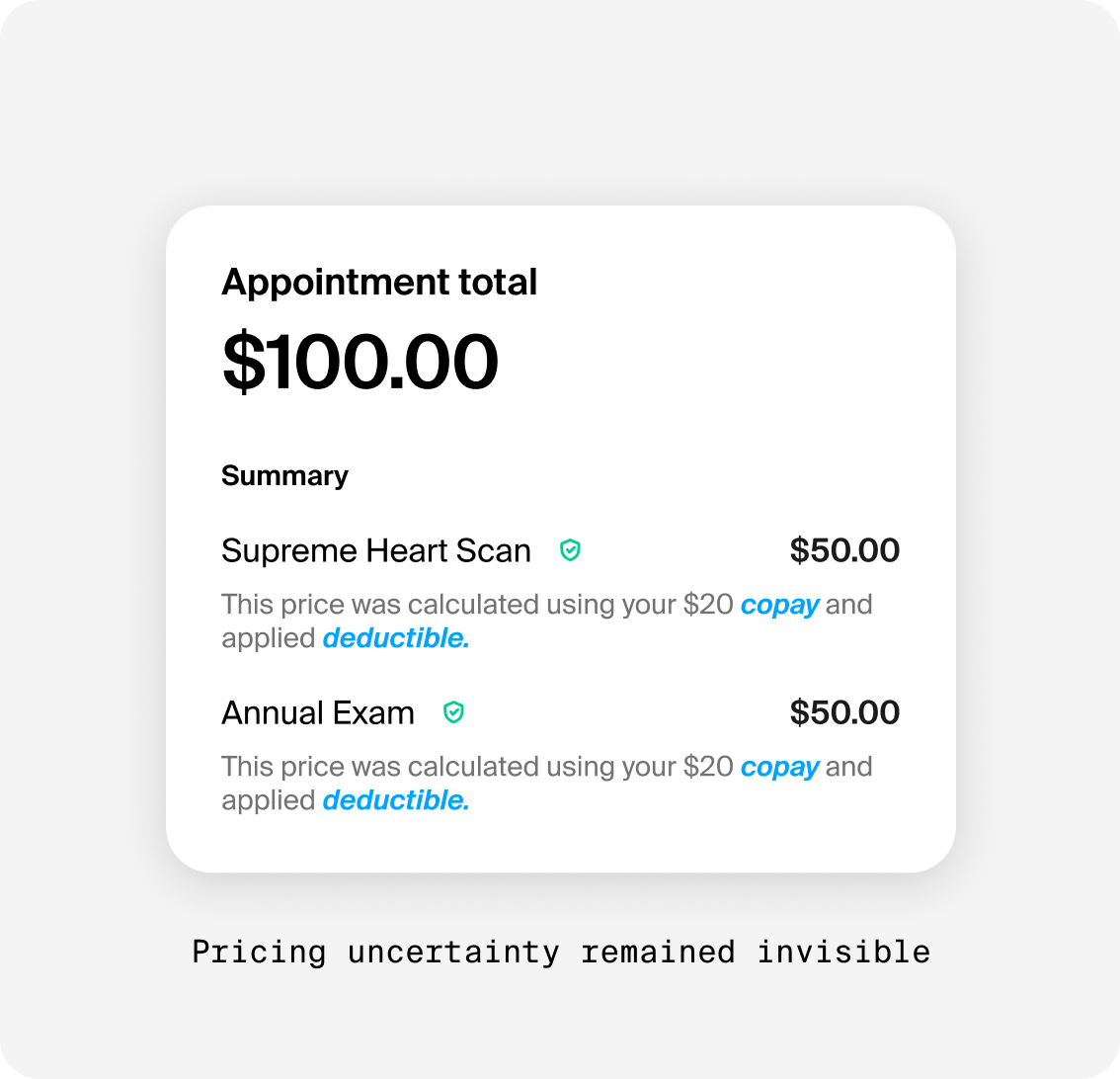
The previous account experience presented the appointment total as a fixed price and only displayed treatments that had already been selected. It did not explain what might change during the visit or why the final amount could differ.

As a result, patients were given more certainty than the underlying pricing model could actually support.

Design direction

Making uncertainty easier to understand

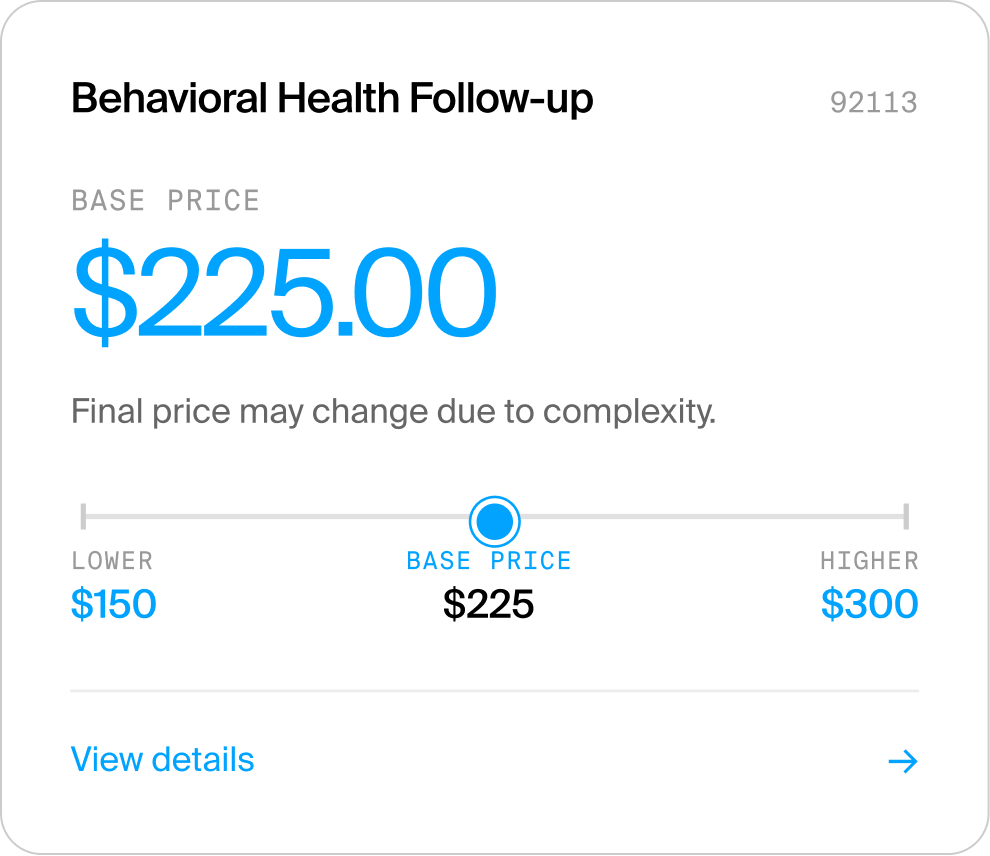
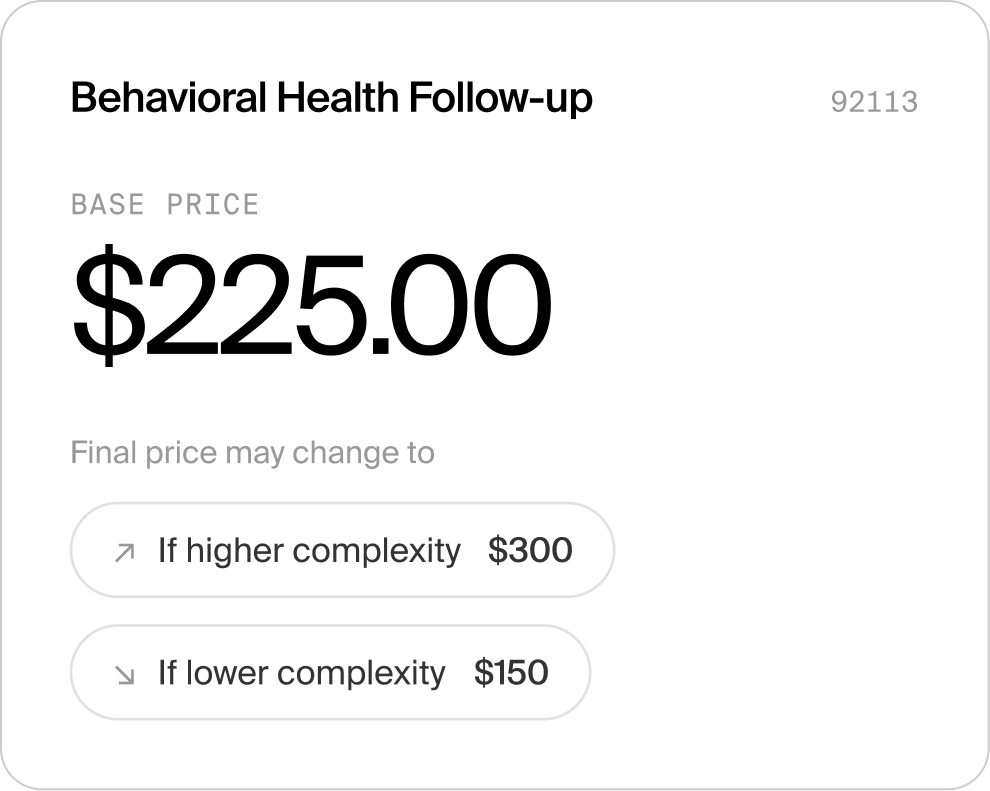
Rather than presenting a single fixed number, the redesigned experience focused on helping patients understand pricing uncertainty without creating additional friction.

The design introduced clearer explanations around potential price changes, improved the relationship between pricing information and payment actions, and established a more transparent framework for communicating healthcare costs.

Try the interactive prototype !

Validating and Iterating with AI

AI-Assisted Visual Exploration

Using AI to rapidly explore design directions

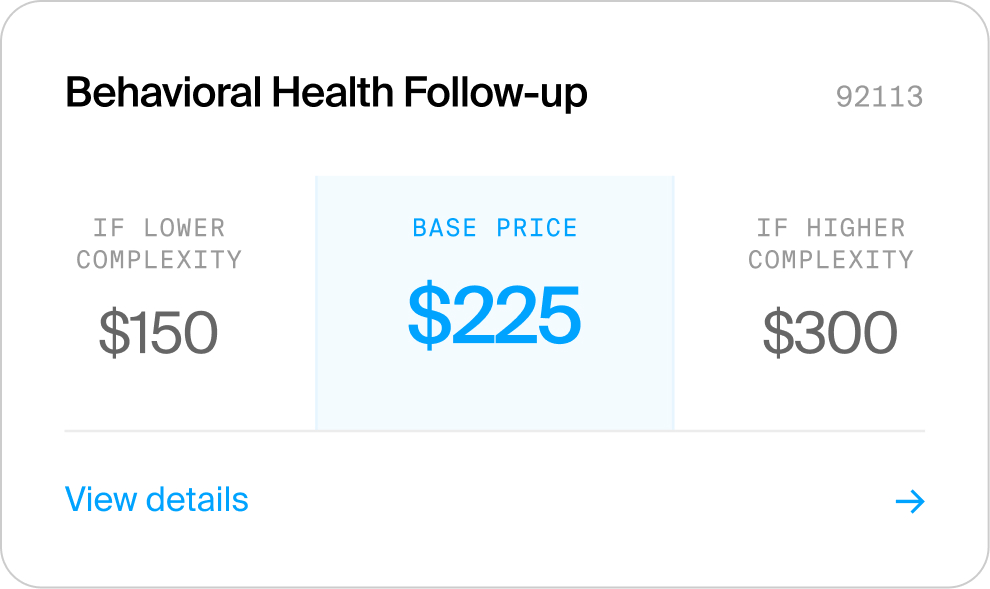
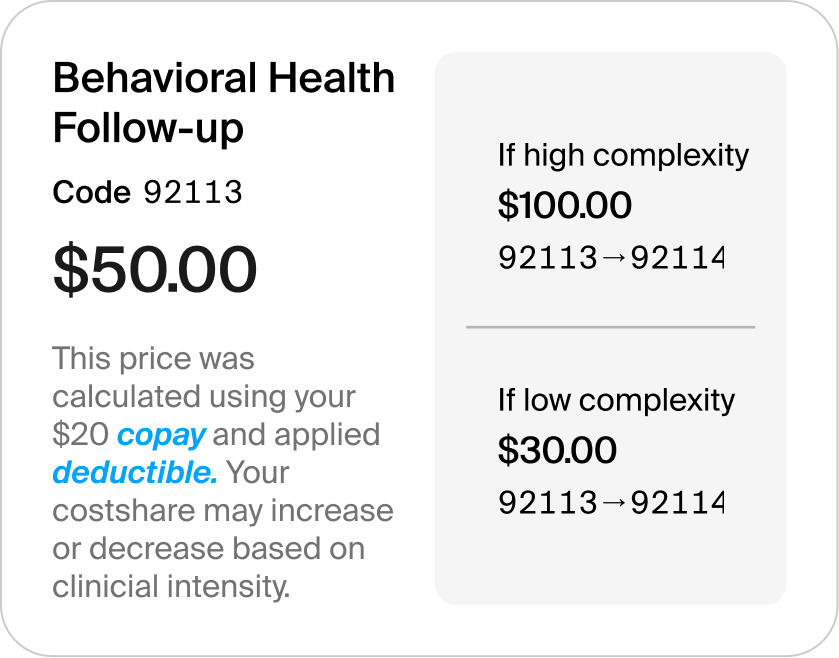
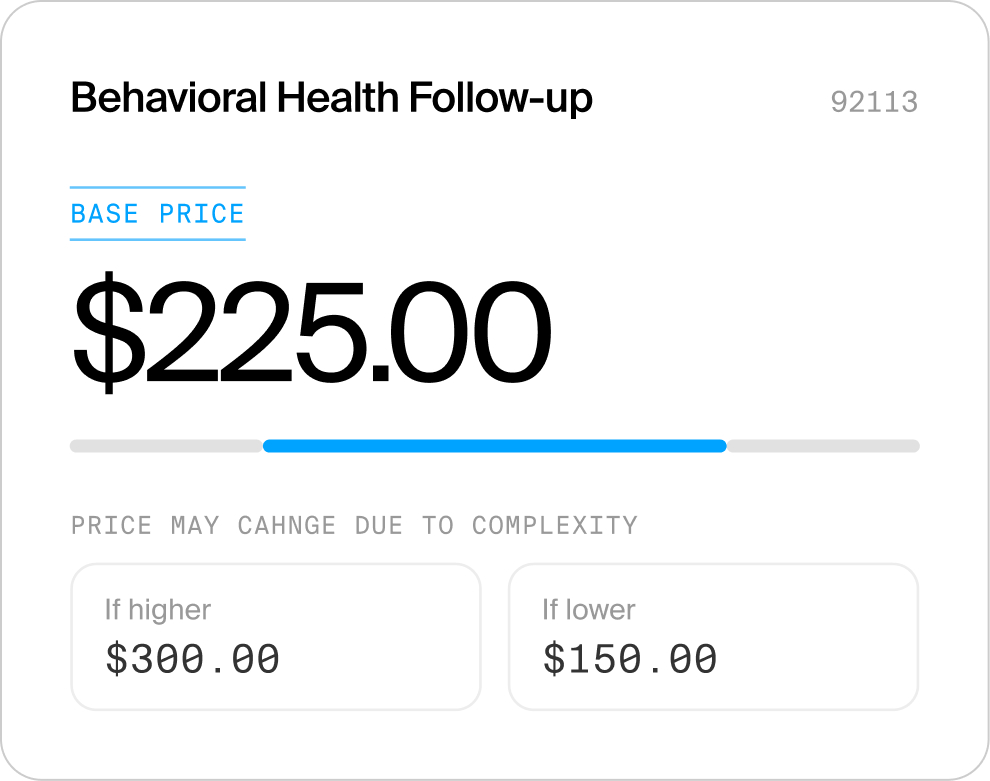
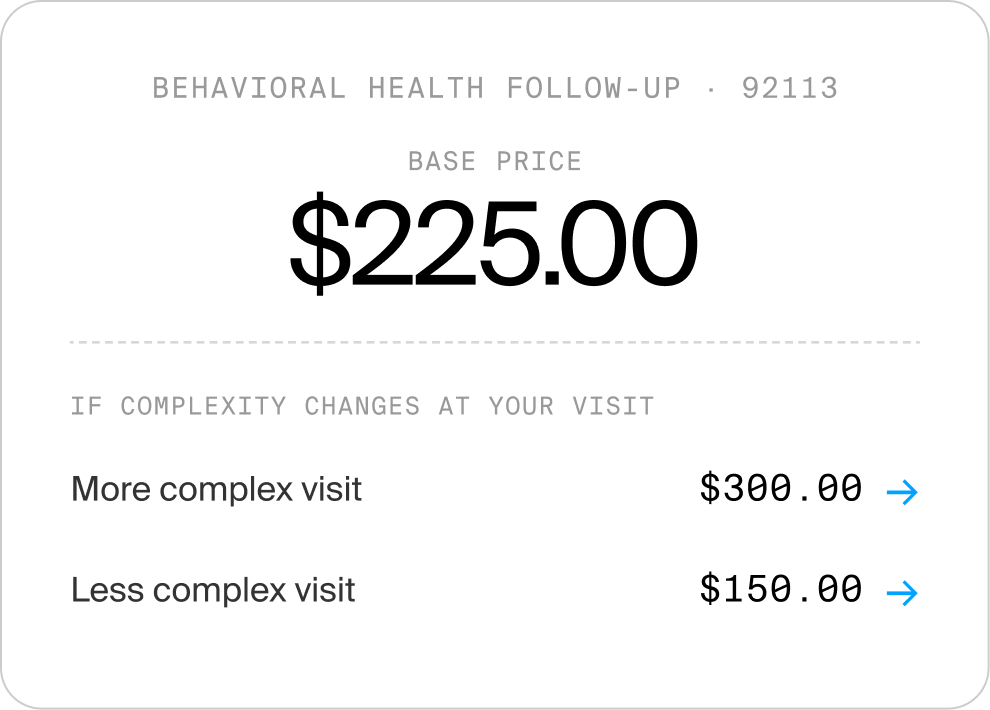
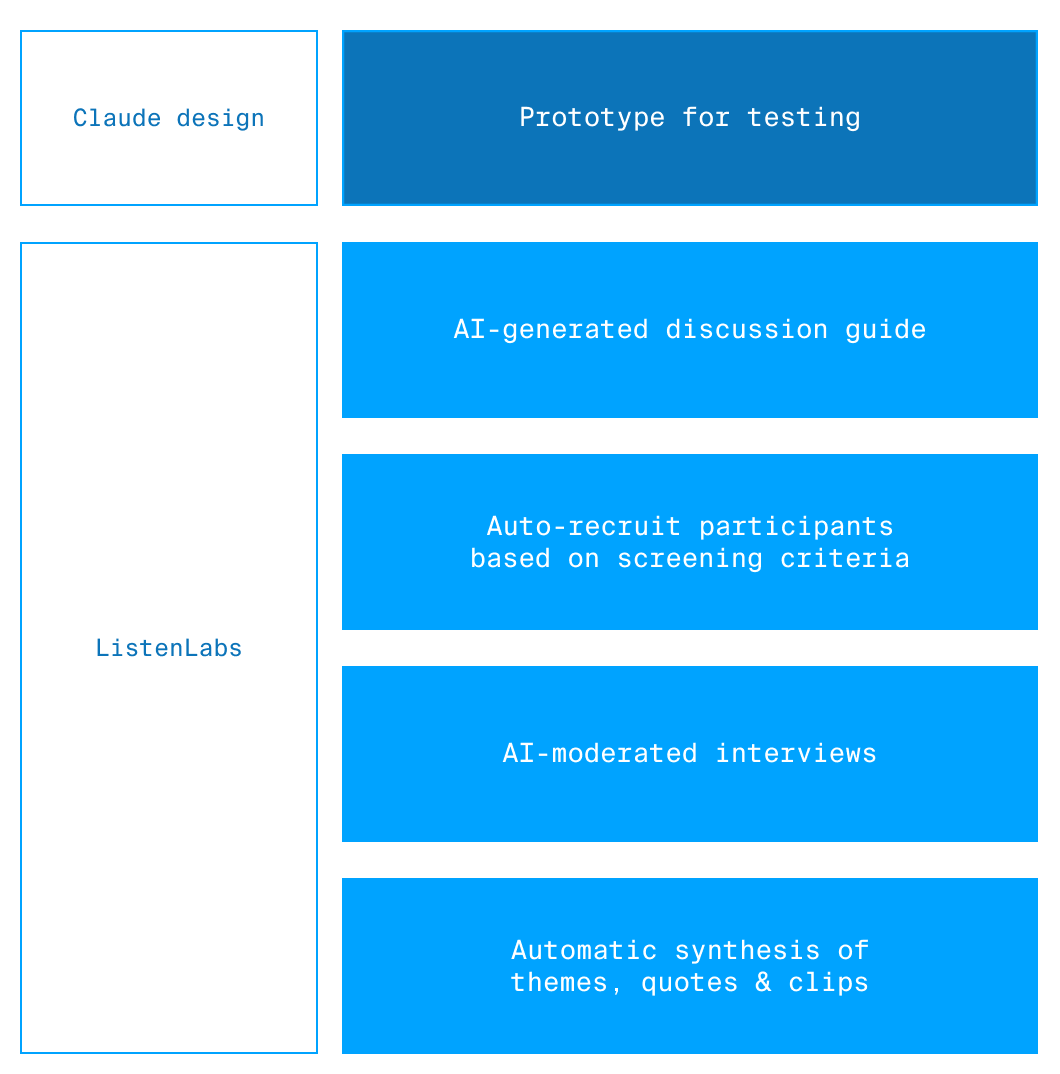
To accelerate early-stage exploration, I used Claude Design to generate and compare multiple approaches for communicating potential price changes.The explorations helped evaluate different information hierarchies, pricing structures, and visual patterns for communicating uncertainty. Rather than committing to a single direction too early, AI enabled rapid iteration across a broader design space and helped identify promising concepts for further refinement.

AI-Powered Research

Scaling qualitative research with ListenLabs

After developing the prototype, I used an AI-powered research workflow to evaluate the redesigned experience with eight U.S.-based participants between the ages of 40 and 80, all with prior healthcare payment experience.The study focused on three key questions:

• Could participants understand that the displayed price was not necessarily final?

• Did they feel confident enough to move forward with payment?

• Where did friction or confusion still exist within the experience?

From Validation to Product Decisions

Research Outcome

The pricing model was largely understood

Research showed strong signals that the redesigned experience was moving in the right direction. Participants successfully completed the payment flow, understood that the displayed price was not necessarily final, and generally appreciated having greater transparency into how healthcare pricing worked.These findings validated the overall direction while highlighting opportunities for refinement.

100%

Completed Payment Flow

100%

Understood Price Could Change

90%

Valued Transparent Price Breakdown

Iteration 01

Making price explanations easier to discover

While most participants understood that pricing could change, only four of eight participants noticed the “Explain Price” action.

This suggested that the challenge was not comprehension, but discoverability. To make pricing explanations easier to find, the interaction was reframed around a more explicit question users were already asking: What could change?

Iteration 02

Integrating transparency directly into checkout

An early concept introduced a dedicated “Likely Treatments” step within the checkout experience.Research showed that participants valued transparency, but the additional step introduced unnecessary friction. Instead of creating a separate educational experience, transparency was integrated directly into the checkout flow, allowing users to access information without disrupting progress toward payment.

Iteration 03

Identifying opportunities for "Supersecript dictionary"

An unexpected finding was the frequency with which participants struggled with healthcare and insurance terminology.Terms such as coinsurance were often misunderstood, even among participants who were otherwise comfortable completing payment tasks. While the checkout experience itself was largely successful, the research revealed a broader opportunity to help patients better understand healthcare language throughout the product ecosystem.

Next Steps

Building a foundation for transparent healthcare pricing

This project validated a new approach to communicating healthcare costs beyond a guaranteed-price model.The next phase of work will focus on refining pricing explanations, improving post-claim experiences, and measuring the impact of transparency on payment confidence and conversion. The research also informed future opportunities such as the Superscript Dictionary, helping patients better understand insurance and healthcare terminology across their entire financial journey.